
Before an organisation buys a single new chair, it needs to know what it already owns. The first part of our series on the criteria in Hållbar Interiör 2.0 focuses on policies and procedures, and explains why the inventory register is now also a tool for accounting for climate impact.
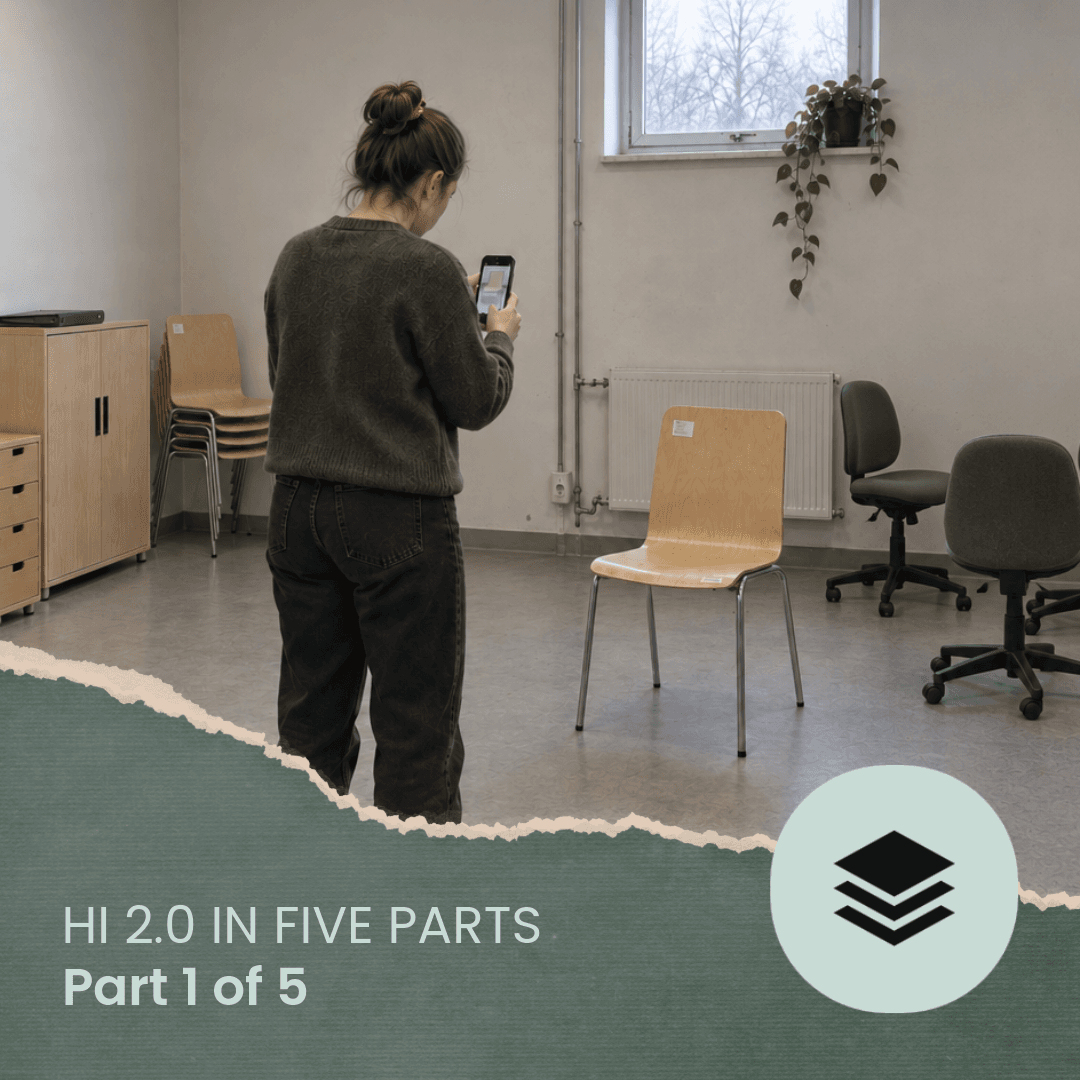
Many organisations have chairs, tables and cabinets that no one has a complete overview of. They may be stored away, located on another floor or sitting in an office in another city. When needs change, it is often easier to order new furniture than to find out what is already available.
At Uppsala University, for example, internal project managers regularly coordinate with one another before interior design projects to explore whether furniture from other projects or campuses can be reused. By finding out what is already available within the organisation, opportunities arise to reuse existing furniture instead of buying new.
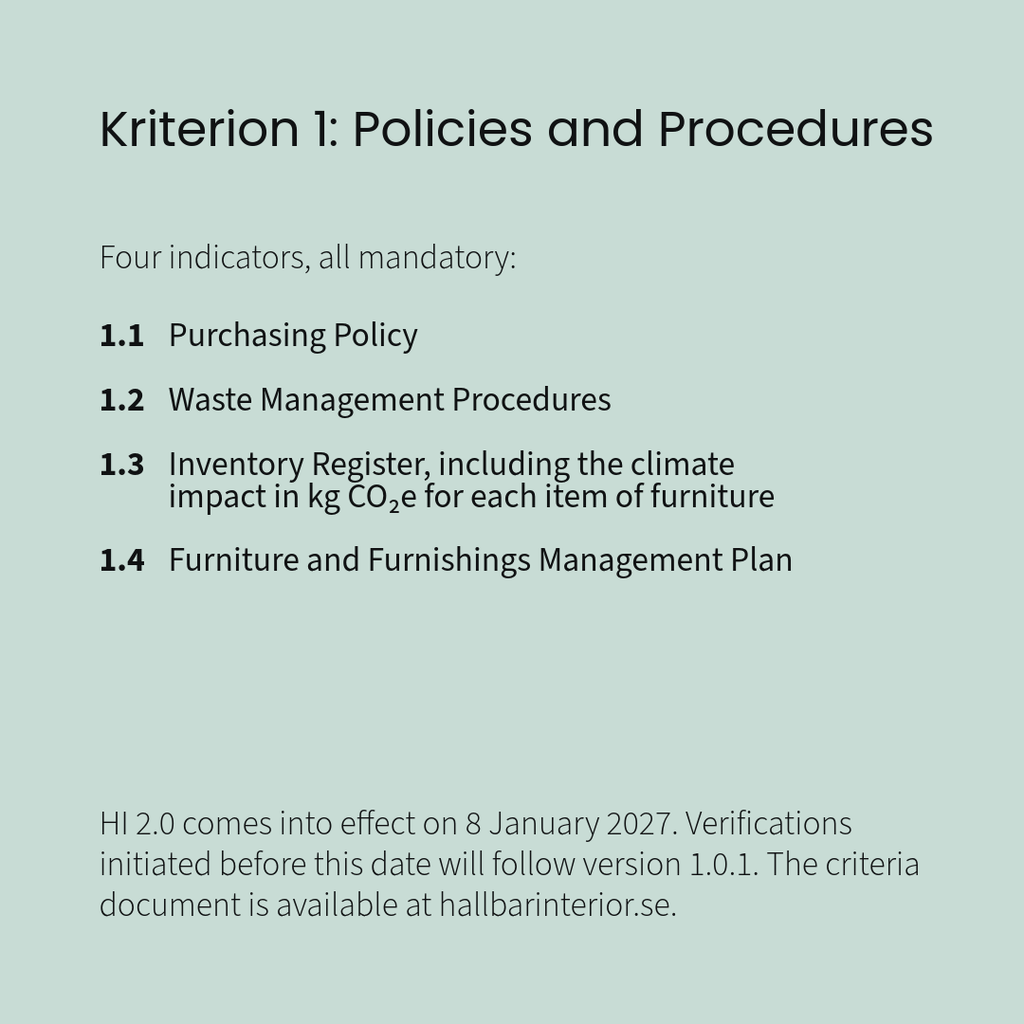
This is where Hållbar Interiör begins. Criterion 1, Policies and Procedures, concerns the decisions made long before anything is purchased, and the importance of keeping track of what the organisation already owns.
Every Piece of Furniture Is Assigned a Climate Value
The most tangible requirement concerns the inventory register. It must cover all furniture and loose furnishings in the premises included in the certification. The register must include information such as category, year of purchase, quantity, location, photograph and condition. It must also state the climate impact of each item in kilograms of carbon dioxide equivalents, kg CO₂e.
This makes the register more than just an inventory. It shows the climate impact associated with the organisation’s furniture and provides the basis for Criterion 5, which assesses the proportion of reused furniture. An organisation that has a clear overview of its existing furniture can move and redistribute items between premises instead of buying new, and demonstrate the impact of doing so. Each individual item does not need its own Environmental Product Declaration (EPD). Generic climate data for different types of furniture are available in the digital tool Hint.
“It is rarely the case that the client is unaware that furniture exists. What is missing is an overview: what furniture there is, how many items, what condition they are in and where they are located. Once we carry out an inventory, it becomes clear how much can be used again,” says Therese Löwstedt, interior architect and member of the Hållbar Interiör Criteria Council.
A Purchasing Policy That Starts by Asking the Right Question
The purchasing policy must follow the order of priority on which Hållbar Interiör is based. First, the organisation must consider whether a change is actually necessary. Next, existing furniture and furnishings should be retained and given a longer useful life. If the need remains, reuse should be prioritised. Only when purchasing something new is necessary should products with a documented low environmental impact be selected.
The policy must be based on the organisation’s needs analysis, which will be the subject of the next part of this series, and cover both fixed and loose furnishings. It is not enough for the policy to exist on paper. During verification, the organisation must be able to demonstrate that it is being applied, for example through samples of purchasing decisions and contracts.
The organisation must also have procedures for managing furniture and furnishings that are no longer needed, prioritising sale, donation and reuse over disposal as waste. In addition, it must have a management plan describing how its furniture and furnishings are maintained, repaired and upgraded to extend their lifespan.
“It is rarely the case that the client is unaware that furniture exists. What is missing is an overview: what furniture there is, how many items, what condition they are in and where they are located. Once we carry out an inventory, it becomes clear how much can be used again,” says Therese Löwstedt, interior architect and member of the Hållbar Interiör Criteria Council.
The Foundation for the Rest of the Certification
Criterion 1 may seem administrative, but it is where the organisation establishes an overview and a way of working that remains in place even when people change roles. Without an up-to-date inventory register, it is not possible to calculate the climate impact of the furniture. And without a policy that puts the question of need first, reuse becomes something that happens by chance.
Next part: Premises Analysis and Planning.

Back
Next