
21 September 2026
The HI label provides organisations with a clear framework for developing and managing their premises sustainably. The label covers both the organisation’s working practices and the physical content of the premises, from policies and planning to energy, fixed interiors and furnishings. The process creates a shared basis for decision-making, monitoring and continued development.
For an organisation, the HI label makes sustainability work concrete and possible to monitor. The criteria help the organisation analyse how its premises are used, manage resources efficiently and make climate impact visible. Following independent verification, the organisation receives clear confirmation that the premises included meet the Hållbar Interiör requirements.
A comprehensive approach to sustainable premises
Premises affect the environment and the climate through how they are selected, planned, used, altered and managed. Decisions concerning the size and use of premises, refurbishments, energy solutions, fixed interiors and furnishings have consequences both when individual changes are made and over time.
The HI label provides organisations with a comprehensive approach to managing these matters. It can be applied to existing premises, both as part of ongoing management and in connection with tenant fit-outs and refurbishments.
Learn more about what the HI label is, who it is intended for and how it works
The organisation’s complete approach to its premises is included
The HI label covers more than the selection of materials and furnishings. The assessment is based on five areas that together provide a comprehensive view of the organisation’s work with its premises:
- policies and procedures
- premises analysis and planning
- energy and technical systems
- fixed interiors
- furnishings
This means that the organisation needs to address both its internal governance and the physical conditions of its premises. The assessment covers areas including purchasing, waste management, inventories of furnishings, use of the premises, energy matters, alterations carried out and the climate impact of fixed interiors and furnishings.
Support for decision-making and long-term management
The criteria help the organisation assess the current situation, identify opportunities for improvement and make well-considered decisions about its premises. The process can, for example, show how spaces are used, which procedures need to be developed and how existing interiors and furnishings can be managed over time.
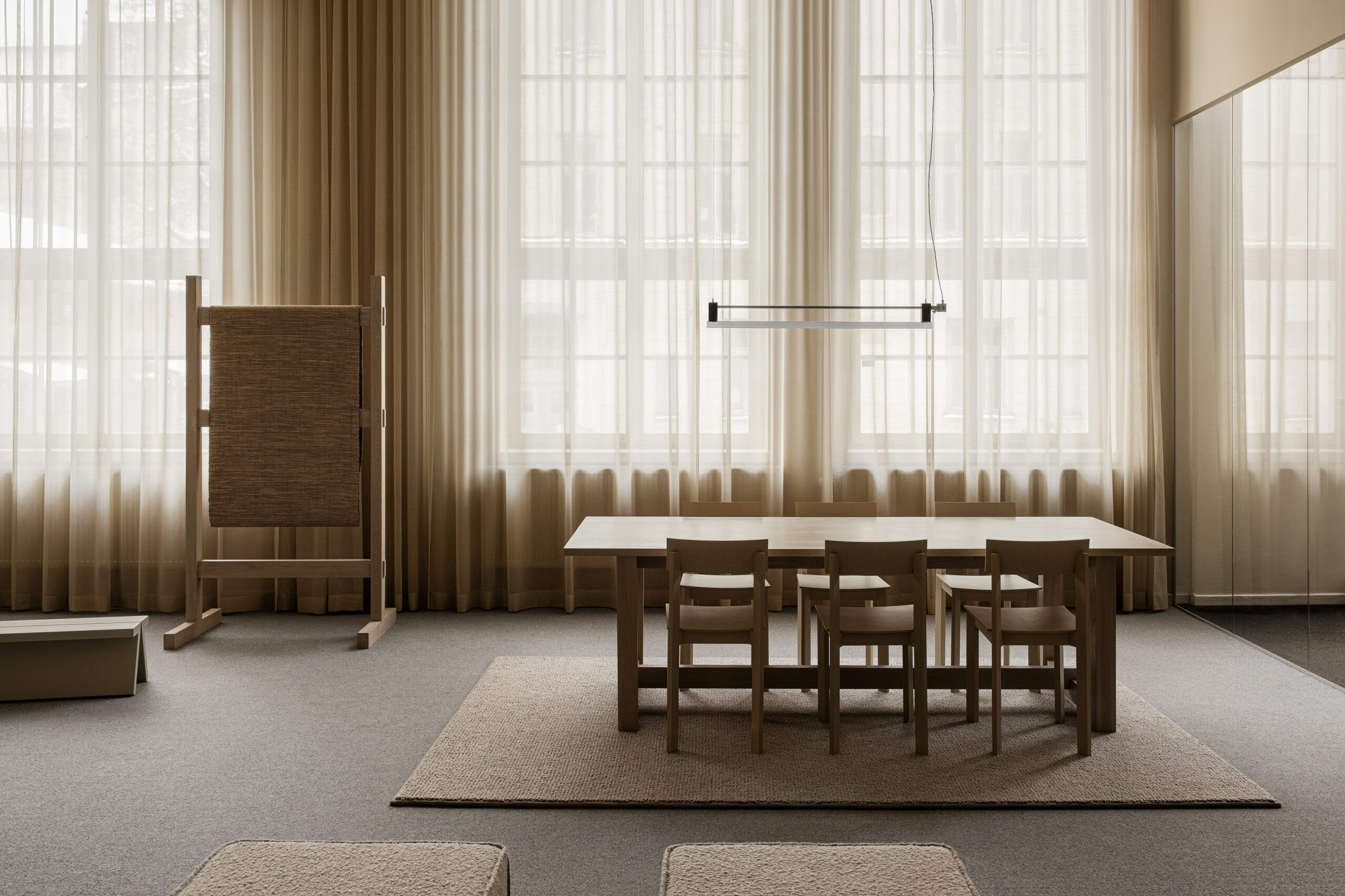
Ogeborg’s showroom, one of the first HI-labelled premises in Sweden. Photograph: Erik Levander.
A common order of priority guides these decisions. The organisation should first consider whether a change is necessary. Preservation and extending service life are then prioritised, followed by reuse. When a new product is needed, alternatives with documented environmental performance and good resource efficiency should be selected.
Collaboration between the organisation and the property owner
The organisation applying for the HI label must have control over the premises included. At the same time, parts of the process may require information or participation from the property owner. This may include information about the electricity supply, technical systems and alterations to fixed interiors.
The HI label can therefore provide a shared framework for dialogue between the organisation and the property owner. The process clarifies which matters need to be addressed, what supporting information is required and how different decisions affect the environmental and climate performance of the premises.
A verified result
The organisation is responsible for producing relevant, sufficient and traceable documentation demonstrating how the criteria are met. An independent verification body then reviews the supporting information and conducts site visits at the premises included in the verification.
Following successful verification, the organisation receives a verification statement and the right to use the Hållbar Interiör label. The HI label therefore provides clear confirmation that the organisation is working systematically to develop and manage its premises in accordance with established criteria.
Would you like to know more? Read about the HI label and how it can be applied to your premises

Back
Next